Self-Evolving AI Research Platform
An AI colleague that searches literature, queries databases, runs analyses — and gets better at it the more you use it. Zero hallucination. All disciplines.
General-purpose AI assistants are built for everyone. ScienceClaw is built for researchers.
285 skills that grow with you. Every research task teaches the system — it creates new specialized skills at runtime, optimized for your field.
Four-layer persistent memory with temporal decay and LanceDB vector storage. Continue literature reviews across sessions — it remembers where you left off.
1-hour sessions with heartbeat monitoring. Mandatory depth thresholds ensure real research — no premature conclusions, no shallow answers.
Every citation must come from a tool result. No fabricated DOIs, no invented authors. If it can't verify, it says so explicitly.
From biomedicine to economics, genomics to political science. 25+ academic databases with structured API queries across natural and social sciences.
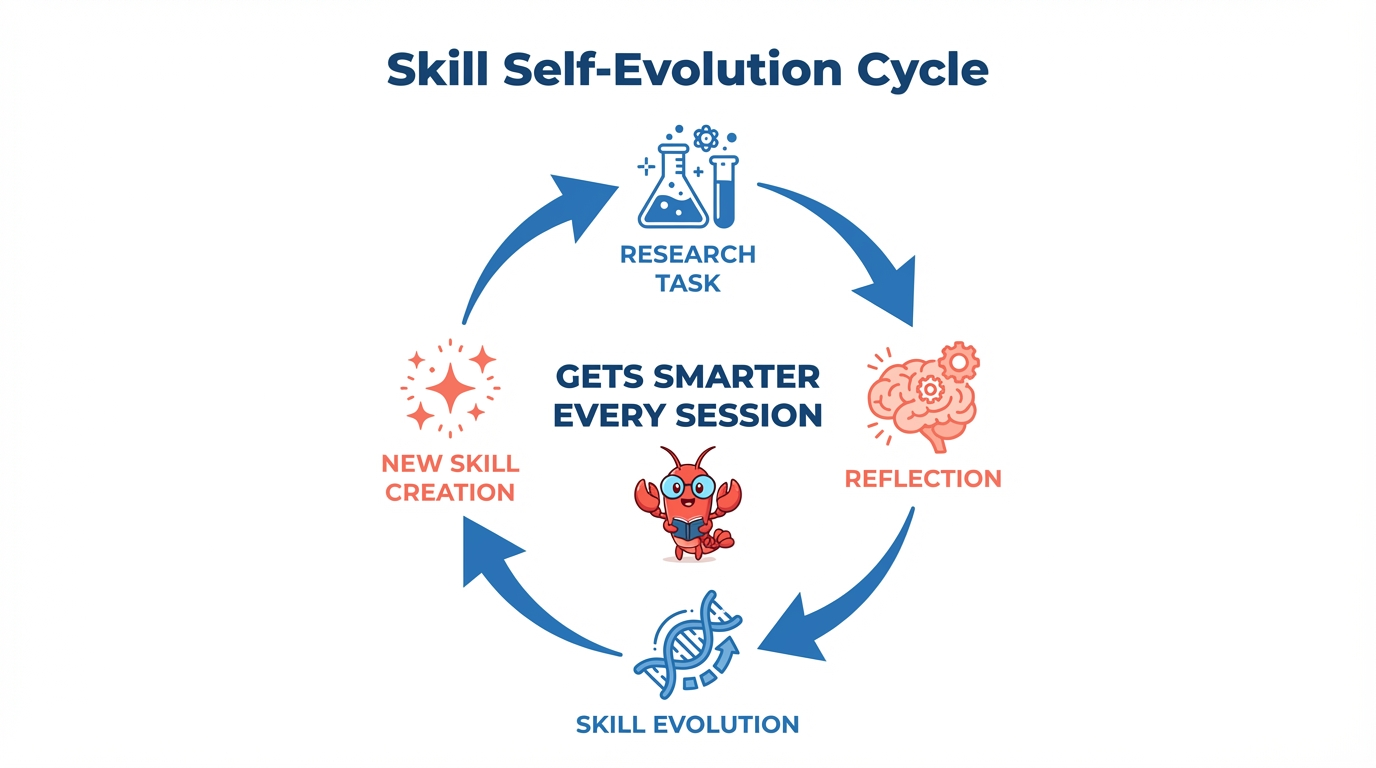
Every session refines the system. Research reflection and skill evolution engines continuously learn from your workflows — the more you use it, the better it gets.
Unlike static AI tools, ScienceClaw's skill library evolves through a continuous cycle:
Week 1: general tools. Month 3: a trained research assistant tuned to your field.
Built different. Built for research.
| Capability | Standard AI | ScienceClaw |
|---|---|---|
| Session timeout | 10 minutes | 1 hour+ |
| Skills | ~54 fixed | 285+ self-evolving |
| Research memory | Forgets after session | 4-layer persistent memory |
| Citation accuracy | May hallucinate | Zero hallucination protocol |
| Database access | None built-in | 25+ academic databases |
| Research depth | Single-pass | Mandatory depth thresholds |
| Skill improvement | Static | Runtime self-evolution |
From clone to research in under 5 minutes.
git clone https://github.com/beita6969/ScienceClaw.git
chmod +x setup.sh && ./setup.sh
npx openclaw gateway
Natural sciences and social sciences across dozens of disciplines.
Connected databases: PubMed, Semantic Scholar, OpenAlex, arXiv, UniProt, KEGG, PDB, ChEMBL, PubChem, NCBI Entrez, Materials Project, World Bank, and more.